Source Programmable Quartz Crystal Oscillator for IoT, Medical, and Telecom
Compare 30 programmable quartz crystal oscillator models from verified suppliers. Explore diverse frequency ranges, supply voltages, and dimensions to find the right component for your electronic design needs.
Key considerations
Products List






Comprehensive Sourcing Guide
Strategic Sourcing Guide for Programmable Quartz Crystal Oscillators
Navigating the procurement landscape for programmable quartz crystal oscillators requires a disciplined approach that balances technical precision with supply chain reliability. These components are critical for timing and synchronization in modern electronics, serving as the heartbeat for data transmission, processing, and control systems. Buyers must move beyond generic specifications to understand the nuanced variations in frequency stability, output waveforms, and environmental resilience that define a successful procurement strategy. This guide outlines the essential factors for evaluating programmable oscillators, ensuring that the selected components meet rigorous operational demands without introducing unnecessary risk.
Technical Specifications and Performance Parameters
The foundation of any successful procurement begins with a deep understanding of the technical specifications that dictate performance. Programmable oscillators are not monolithic; they vary significantly in frequency ranges, drive levels, and output waveforms. When evaluating potential suppliers, buyers must verify the specific frequency range against their application needs. Data indicates that certain models support broad ranges such as 10750MHz for LVDS/PECL interfaces and 25175MHz for HCSL, while others may focus on lower frequencies like 32.768kHz for real-time clock applications or 1MHz~125MHz for general timing.
Drive level is another critical parameter that often determines the longevity and stability of the oscillator. Specifications show a drive level of 0.5MW in certain high-performance contexts, which must be matched to the load requirements of the host circuit. Furthermore, the output waveform defines the signal integrity; options include CMOS Square waves for general logic applications or differential signals like LVDS, PECL, and HCSL for high-speed data transmission. The rated load impedance also varies, with common values including 100 Ohms for LVDS and 50 Ohms for PECL/HCSL, necessitating careful impedance matching during the design phase.
Temperature stability is paramount for applications operating in extreme environments. Buyers should look for oscillators with a wide operating temperature range, such as -55℃ to 125℃, which ensures reliability in automotive, industrial, and aerospace sectors. Frequency temperature stability, often detailed in specific tables provided by manufacturers, must be verified against the system's tolerance requirements. Aging characteristics, observed at 1ppm/Year in high-quality units, indicate how the frequency will drift over time, a factor that is crucial for long-term system calibration.
Compliance, Certification, and Environmental Standards
In the global electronics market, compliance with international standards is not merely a formality but a prerequisite for market access and product safety. While specific certification statuses for every individual product may vary, buyers should prioritize suppliers who demonstrate adherence to recognized environmental and safety frameworks. The presence of ISO14001 certification is a high-confidence indicator of a supplier's commitment to environmental management systems, suggesting that their manufacturing processes are monitored for sustainability and waste reduction.
Regulatory compliance often extends to restrictions on hazardous substances. Although specific test results for individual batches may not be publicly listed, the industry standard generally requires adherence to ROHS and REACH directives. Buyers must explicitly request evidence of compliance with these standards to ensure that the components do not contain restricted substances that could violate regulations in target markets. Additionally, verifying adherence to industry-specific standards like IEC 60679-1 for crystal resonators provides assurance regarding the mechanical and electrical robustness of the components.
When evaluating a supplier's documentation, look for clear statements regarding material composition and manufacturing standards. The absence of explicit certification claims in a product listing does not necessarily imply non-compliance, but it does require the buyer to request formal documentation before placing an order. This due diligence protects the supply chain from potential regulatory penalties and ensures that the final product can be sold in regions with strict environmental laws.
Cost Drivers and Pricing Structures
Understanding the cost drivers for programmable quartz crystal oscillators is essential for budgeting and negotiation. The observed price range in the market is extensive, spanning from $0.03 to $6500. This vast disparity is driven by several factors, including the complexity of the frequency synthesis, the precision of the frequency stability, the output waveform type, and the packaging requirements. High-frequency oscillators with differential outputs like LVDS or PECL typically command higher prices due to the sophisticated circuitry required to maintain signal integrity at those speeds.
Minimum Order Quantity (MOQ) is another significant factor influencing the effective cost per unit. The observed MOQ range varies from 1 to 3000 units. For prototyping or low-volume production, suppliers offering low MOQs are valuable, though the unit price may be higher. Conversely, high-volume procurement allows for economies of scale, potentially reducing the unit cost significantly. Buyers should analyze their projected demand to determine the optimal order size that balances inventory holding costs with unit pricing.
Packaging and logistics also contribute to the total cost of ownership. Standard packaging details such as reel, tube, or bag configurations affect handling efficiency. Some suppliers may offer shipping cartons for bulk orders, which can reduce per-unit shipping costs. Additionally, the origin of the product, such as Chengdu or Guangdong, China, can influence logistics costs and lead times. Buyers should factor in these variables when comparing total landed costs across different suppliers.
Typical Applications and Use Cases
Programmable quartz crystal oscillators are integral to a wide array of applications, each with unique timing requirements. In telecommunications, high-frequency oscillators supporting ranges up to 750MHz are essential for data transmission and synchronization in network infrastructure. The ability to support LVDS and PECL outputs makes these components ideal for high-speed interfaces where signal noise and crosstalk must be minimized.
In consumer electronics and IoT devices, lower frequency oscillators, such as those operating at 32.768kHz, are commonly used for real-time clock (RTC) functions. These components require low power consumption and high stability over time, often featuring aging rates as low as 1ppm/Year. The compact dimensions of these oscillators, such as 2.5mm x 2.0mm x 0.8mm, make them suitable for space-constrained mobile devices and wearables.
Industrial and automotive applications demand oscillators with wide operating temperature ranges and high reliability. The -55℃ to 125℃ range ensures that the timing components function correctly in harsh environments, from engine compartments to outdoor control units. In these sectors, the duty cycle stability, typically specified as 50±5% at 25℃, is critical for maintaining precise timing in control loops and safety systems.
Supplier Evaluation and Selection Criteria
Selecting the right supplier requires a multi-faceted evaluation process that goes beyond price and availability. Buyers should assess the supplier's production capabilities, including their supply ability, which can range from 100,000 pieces per month for established manufacturers. This capacity ensures that the supplier can meet both immediate and long-term demand without causing production delays.
The place of origin is another factor to consider, as it can impact lead times and logistics. Suppliers located in major manufacturing hubs like Guangdong or Chengdu often have established supply chains and faster response times. However, buyers should also verify the supplier's quality control processes and their ability to provide consistent product quality across different batches.
Part status is a critical indicator of long-term availability. Buyers should prioritize suppliers offering components with an "Active" part status to ensure that the product will remain available for the lifecycle of their design. Discontinued or obsolescence-prone parts can lead to costly redesigns and supply chain disruptions. Additionally, the availability of customization options allows buyers to tailor specifications to their specific needs, providing a competitive advantage in product differentiation.
Quality Control and Long-Term Procurement Considerations
Ensuring the quality of programmable quartz crystal oscillators requires a robust quality control strategy. Buyers should verify that the supplier conducts rigorous testing for frequency tolerance, which can vary from ±10ppm to tighter tolerances depending on the application. The start-up time, often specified as ≤10ms, is another key performance metric that affects system initialization speed and should be validated through testing.
Long-term procurement considerations include the stability of the supply chain and the supplier's ability to adapt to changing market conditions. Buyers should establish clear communication channels with suppliers to monitor inventory levels and anticipate potential shortages. The availability of detailed packaging details, such as reel tabe bag configurations, ensures that the components can be handled efficiently in automated assembly lines, reducing the risk of damage and improving production yield.
Finally, buyers should maintain a proactive approach to supplier relationship management. Regular audits and performance reviews can help identify areas for improvement and ensure that the supplier continues to meet the evolving needs of the business. By focusing on these quality control and long-term considerations, buyers can build a resilient supply chain that supports the successful deployment of their electronic products.
Comparative Analysis of Key Specifications
To facilitate informed decision-making, the following table summarizes key specifications observed across different product models. This comparison highlights the diversity in frequency ranges, dimensions, and output waveforms available in the market.
| Model Series | Frequency Range | Output Waveform | Dimensions (mm) | Supply Voltage | Operating Temp Range |
|---|---|---|---|---|---|
| PX53B | 10 | CMOS Square | 5.0 x 3.2 x 1.25 | 2.5V; 3.3V | -55℃~125℃ |
| PX25A | 32.768K/0.5MHz~150MHz | Not Specified | 2.5 x 2.0 x 0.8 | 1.8V~3.3V | Not Specified |
| PX32A | 32.768K/1MHz~125MHz | Not Specified | 3.2 x 2.5 x 0.95 | 1.8V~5V | Not Specified |
| PX75A | Not Specified | Not Specified | 7.0 x 5.0 x 1.3 | Not Specified | Not Specified |
| PX53A | Not Specified | Not Specified | 5.0 x 3.2 x 1.2 | Not Specified | Not Specified |
| PX32B | 10 | Lvds(L); Pecl(P); Hcsl(H) | 3.2 x 2.5 x 0.9 | Not Specified | Not Specified |
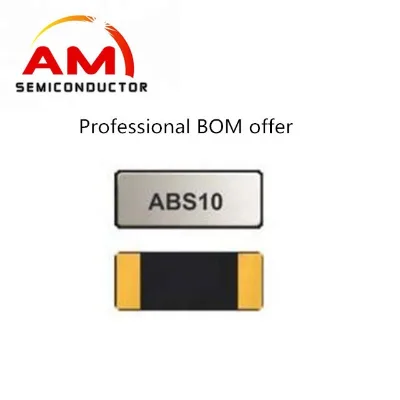
| ABS10-32.768KHZ-1-T | 32.768kHz | Not Specified | 4.90 x 1.80 | 5.0V | Not Specified |
This table illustrates the importance of matching specific technical requirements to the correct model series. Buyers must carefully review the frequency range, output waveform, and physical dimensions to ensure compatibility with their design constraints. By leveraging this comparative data, procurement teams can make more accurate selections that align with their project goals.
FAQs
What certifications do programmable quartz crystal oscillator suppliers hold?
Suppliers often hold ISO14001 certification for environmental management systems. This indicates their manufacturing processes are monitored for sustainability, though specific ROHS or REACH compliance requires direct verification from the vendor.
Which frequency ranges are available for programmable quartz crystal oscillators?
Available ranges include 10 to 750MHz for LVDS/PECL and 25 to 175MHz for HCSL. Lower frequency options like 32.768kHz are also available for real-time clock applications in various models.
Can programmable quartz crystal oscillators operate in extreme temperatures?
Yes, many units support a wide operating temperature range from -55℃ to 125℃. This ensures reliability in harsh environments such as automotive or industrial sectors requiring stable timing performance.
How does aging affect the frequency stability of these oscillators?
High-quality units exhibit an aging rate of 1ppm per year. This low drift rate is crucial for long-term system calibration and maintaining precise timing over extended operational periods.
What supply voltage options are supported by programmable quartz crystal oscillators?
Common supply voltages include 1.8V, 2.5V, 3.3V, and up to 5.0V depending on the model. Specific models support ranges like 1.8V to 3.3V or 1.8V to 5V for flexible integration.
Which output waveforms are available for programmable quartz crystal oscillators?
Output waveforms include CMOS Square, LVDS, PECL, and HCSL. The choice depends on the application, with CMOS suitable for general logic and differential signals for high-speed data transmission.